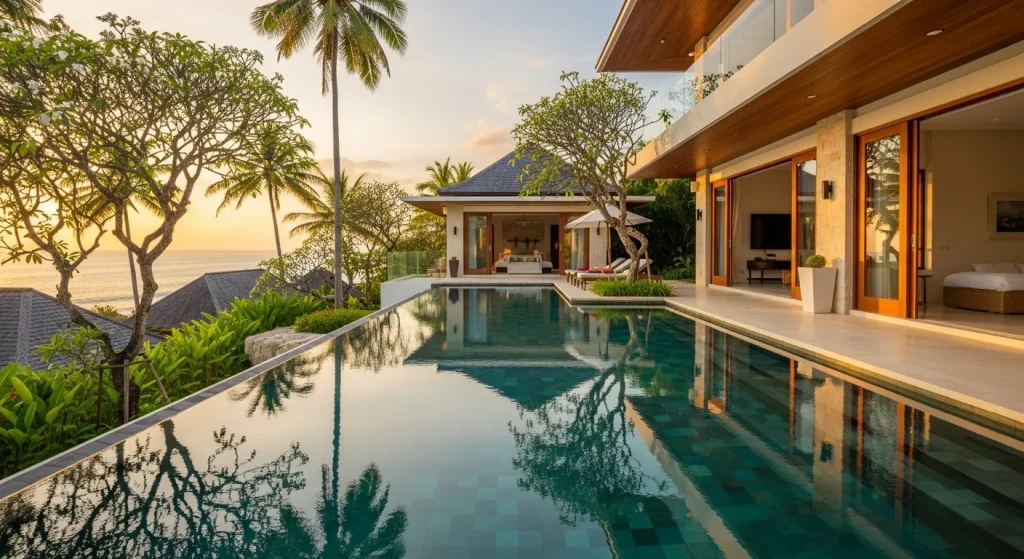
KEK Sanur is positioned as one of Indonesia’s three most strategic Special Economic Zones for foreign investors, focused on healthcare and wellness tourism. It has a planned investment value around Rp 10.2 trillion (~USD 650–700 million) and a 2027 outlook of strong double-digit growth in medical and wellness tourism demand.
KEK Sanur 2027 Buyer Guide: Understanding Supply, Demand, and Property Trends
As Sanur SEZ investment analysts and senior content leads for Kek Sanur Investment, we provide a focused briefing for investors, family offices, HNW buyers, and funds considering opportunities within the KEK Sanur Special Economic Zone. This guide addresses supply, demand, and property trends relevant to a 2026–2027 investment horizon, with a primary focus on the KEK Sanur investment minimum capital requirements and overall market dynamics.
1. Market Size & Growth
Scale of KEK Sanur Project
The KEK Sanur project encompasses a total planned land area of 41.26 hectares. The total planned investment, comprising both public and private capital, is approximately Rp 10.2 trillion. Upon full operation, the zone is expected to generate 43,647 jobs. This scale underscores a significant governmental and private sector commitment, establishing a robust foundation for demand in related property and services sectors.
Indonesia Health & Wellness / Medical Tourism Context
KEK Sanur is nationally designated as a flagship zone for healthcare and wellness tourism. It is cited as one of three KEKs most relevant for investors today, alongside Nongsa (digital) and Gresik (heavy industry). Indonesia’s health & wellness sector is among the fastest-growing consumer sectors, with an estimated Compound Annual Growth Rate (CAGR) of 10–15% in the mid-2020s. By 2030, the government targets repatriating 4–8% of Indonesians who currently seek treatment abroad, equivalent to 123,000–240,000 patients annually, to facilities within Sanur. This implies a high structural growth path over the 2026–2027 window as capacity ramps up, directly impacting demand for medical facilities, supporting accommodations, and ancillary services.
Macro / Bali Positioning
Bali is actively promoted as a global investment destination, with KEK Sanur highlighted as a new magnet for international investors, particularly in medical tourism. Events such as the Bali Investment Challenge 2026 explicitly showcase KEK Sanur as a success story and priority project, indicating strong pipeline visibility and sustained government backing. This macro positioning reinforces the zone’s strategic importance and its potential to attract significant capital and visitor flows.
In practical terms, for 2026–2027, investors are observing a multi-billion-rupiah zone-level CAPEX program, largely committed, alongside a double-digit-growth addressable market in healthcare, wellness, and experiential travel. This convergence feeds demand for hospitals, clinics, hotels, and ancillary services, providing a clear investment thesis.
2. Typical Price Ranges (Investment & Product)
Public sources do not list per-square-metre land prices within KEK Sanur due to the bespoke nature of large-scale infrastructure and property development projects. Investment within a Special Economic Zone, particularly one of KEK Sanur’s strategic importance, is typically structured around project-based agreements rather than speculative land purchases. Minimum capital requirements are not fixed per square metre but are tied to the scale and nature of the proposed development. For significant healthcare or hospitality projects, this commonly translates to minimum investments in the tens of millions of US dollars, reflecting the necessary infrastructure and operational scale.
The investment is often a function of:
- Type of development: Hospital, clinic, wellness resort, hotel, serviced apartments, commercial retail.
- Scale of development: Number of beds, rooms, or commercial units.
- Infrastructure requirements: Specific medical equipment, specialised facilities.
- Job creation commitments: Contribution to the 43,647-job target.
For smaller-scale investments, opportunities may exist through partnerships with master developers or by acquiring units within established developments (e.g., hotel rooms, serviced apartments, or commercial spaces within integrated complexes). These smaller entry points would still require substantial capital, typically in the hundreds of thousands to low millions of US dollars, depending on the asset type and size.
2027 note: By 2027, with major infrastructure components nearing completion and initial medical/wellness facilities operational, the market will likely see more defined pricing benchmarks for completed units or operational assets, reflecting established demand and yield profiles.
3. KEK Sanur Investment Minimum Capital
Direct investment into KEK Sanur, particularly for developing new facilities, is subject to a framework designed for large-scale projects. While a specific ‘minimum capital’ figure for all investors is not publicly stated, the nature of the zone’s focus on healthcare and wellness tourism implies substantial capital outlays. For foreign direct investment (FDI) in Indonesia, general guidelines for capitalisation for a PMA (Penanaman Modal Asing) company typically start at Rp 10 billion (approximately USD 650,000–700,000). However, for projects within a strategic KEK like Sanur, especially those involving medical facilities or large hospitality developments, the actual required investment will be significantly higher, often in the range of tens of millions to hundreds of millions of US dollars, depending on the specific project scope and regulatory approvals.
This capital is allocated towards:
- Land lease/acquisition (under specific KEK regulations).
- Construction of facilities (hospitals, clinics, hotels, resorts).
- Medical equipment and technology.
- Operational capital for staffing and services.
- Compliance with KEK-specific incentives and requirements.
Investors should anticipate needing substantial capital reserves beyond the initial investment to sustain operations during the ramp-up phase and to meet any unexpected development costs. The KEK status provides fiscal and non-fiscal incentives designed to offset some of these costs and enhance returns.
4. Supply Overview
The supply within KEK Sanur is centrally planned and controlled to align with its healthcare and wellness tourism mandate. This differs from organic market development. Key components of supply include:
- Bali International Hospital (BIH): A major anchor, developed in partnership with the Mayo Clinic, expected to significantly increase medical tourism capacity. This forms a core component of the zone’s value proposition.
- Hotels and Resorts: New or redeveloped hospitality assets designed to accommodate medical tourists and their families, as well as general wellness travellers. These range from luxury resorts to serviced apartments.
- Wellness Centres: Dedicated facilities for preventative health, spa treatments, and holistic well-being services.
- Commercial and Retail Spaces: Supporting infrastructure for visitors and residents, including F&B, pharmacies, and convenience retail.
- Residential Components: Limited, often integrated residential offerings (e.g., serviced residences) for long-stay visitors or professionals.
Supply is being brought online in phases, with a focus on delivering high-quality, purpose-built infrastructure. The controlled supply environment helps prevent oversupply in specific sub-sectors and maintains asset values.
5. Demand Drivers
Demand for KEK Sanur properties and services is driven by several factors:
- Medical Tourism Repatriation: The government’s target to repatriate 123,000–240,000 Indonesian patients annually represents a significant, captive demand source.
- International Medical Tourists: Bali’s established reputation as a global tourism destination provides a natural funnel for international patients seeking high-quality, affordable medical care combined with recovery in a desirable location.
- Wellness Tourism Growth: The global wellness tourism market is expanding, and KEK Sanur directly caters to this with its comprehensive wellness offerings.
- Expatriate and Digital Nomad Community: Bali’s large and growing expatriate population provides a base for healthcare and wellness service demand.
- Domestic Tourism: Increasing affluence among Indonesia’s middle and upper classes fuels demand for quality healthcare and wellness experiences within the country.
The confluence of these drivers creates a robust and diversified demand profile for KEK Sanur’s offerings.
6. Property Trends & Outlook 2026–2027
The 2026–2027 period will be critical for KEK Sanur as major anchor projects become fully operational and the zone transitions from development to active service provision. Property trends will reflect this maturation:
- Specialised Hospitality: Continued demand for hotels and serviced apartments equipped to cater to medical tourists, including accessibility features and longer-stay amenities.
- Medical Office & Clinic Spaces: Opportunities for specialised clinics and medical practices to lease or acquire space within the zone, complementing the main hospital.
- Integrated Wellness Properties: Properties combining accommodation with wellness programmes, preventative health services, and recreational facilities will see strong interest.
- Retail and F&B Support: Growth in demand for retail and food and beverage outlets to serve visitors, patients, and staff within the zone.
- Yield Stabilisation: As facilities achieve operational stability and occupancy rates grow, investors can expect more predictable yield profiles for income-generating assets.
- Capital Appreciation: Early investors in well-positioned assets are likely to see capital appreciation as the KEK achieves its full potential and demand solidifies.
The controlled development and strategic focus of KEK Sanur are designed to foster stable and appreciating property values, supported by strong government backing and a clear demand pipeline.
For a detailed assessment of specific investment opportunities within KEK Sanur, including an analysis of minimum capital requirements for your project type, book an investment consultation on WhatsApp with Kek Sanur Investment. Our team provides bespoke advisory for foreign and domestic investors in Indonesia.